
Getting Grounded: Where Holistic Management Meets Good Stockmanship

There are some workshops that give you a new set of tools. Others give you a new way of seeing the work you already do. The Getting Grounded with Sheep and Stockmanship Holistic Management workshop at Graze the Prairie, led by Linda Pechin-Long and Dawn Hnatow, was very much a combination of the two.

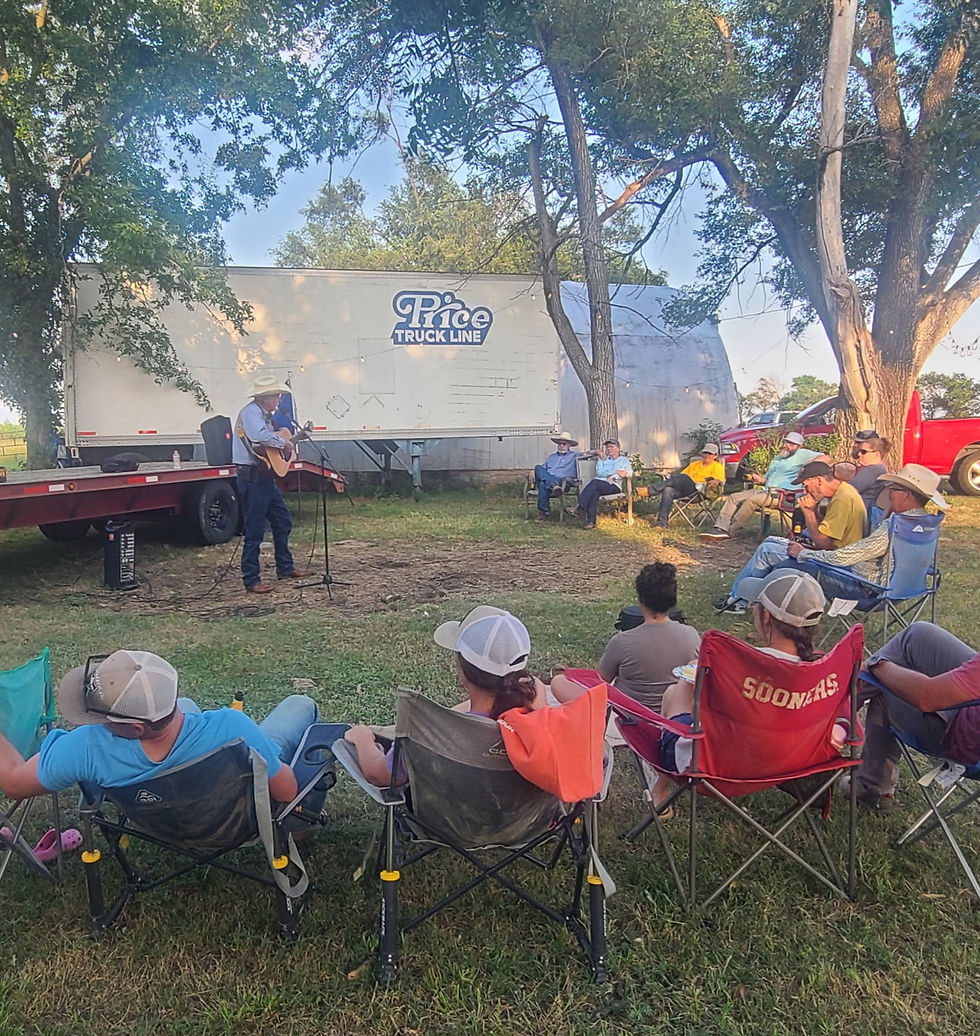
The workshop was graciously hosted at Keith Long and Linda Pechin-Long’s farm, Graze the Prairie, in Winfield, Kansas where 21 participants got two days of hands-on experience working with sheep. Course evaluations indicated that 100% of participants both would recommend this workshop to others and will be implementing new practices in their operations based on what they learned.
At its heart, Holistic Management is about making better decisions by looking at the whole system—land, livestock, people, finances, and the future we are trying to create. What stood out during the workshop was just how naturally those principles align with something good stockmen and stockwomen have practiced for generations: pay attention, understand your animals, and work with the system rather than against it.
Seeing the Whole Picture
Holistic Management asks us to step back from individual problems and consider the bigger picture. Instead of simply asking, “How do I fix this?” we learn to ask, “What is happening here, why is it happening, and what are the consequences of the choices I make?”
That mindset fits remarkably well with good stockmanship.

A skilled stockperson doesn't look at a sheep as simply a production unit. They observe behavior. They notice changes in appetite, movement, posture, flock dynamics, and temperament (all critical components to operations focused on animal welfare and humane animal treatment). They understand that the way animals are handled today can influence how they respond tomorrow. The same principle applies to the land.
Rather than treating pasture as an endless supply of feed, Holistic Management encourages us to understand how grazing, recovery, soil, water, plants, animals, and weather interact. Good stockmanship and good grazing management both depend on observation and timing.
Low-Stress Handling Is More Than a Technique
One of the strongest connections between Holistic Management and stockmanship is the emphasis on working with animal behavior.
Sheep have their own instincts, social structures, flight zones, points of balance, and ways of communicating. When we understand those things, handling becomes less about forcing animals to go somewhere and more about creating the conditions in which they want to move.
That can mean fewer people, less pressure, less noise, and better positioning.
It can also mean better outcomes, including more profitable ranches and farms.
When livestock are handled calmly and thoughtfully, we reduce unnecessary stress. This makes things safer for people and animals and builds a relationship that makes the animals easier to work with over time. Good stockmanship becomes a feedback loop: the more we understand the animals, the better we handle them; the better we handle them, the more confidently they respond; and the easier they are to handle, the more opportunities we have to make thoughtful management decisions.
And, as one participant noted, the same goes with our management teams/family members that we farm with. This type of a-ha moment is typical of Holistic Management workshops and reminds us that using a whole systems approach can dramatically improve many aspects of farm and life.
The Land and the Livestock Are Connected
Holistic Management also challenges us to recognize that livestock behavior and land management aren't separate conversations.
How we move animals across the landscape affects what happens to the plants and soil. How animals experience that movement affects how they respond to us. How much pressure we apply, how long animals stay in an area, and how much recovery the pasture receives all become part of one interconnected system.
This is where the workshop's focus on sheep was particularly valuable. Sheep can be excellent teachers. They are observant, social, and responsive to their environment. When we slow down enough to watch them, they can tell us a great deal about the pasture and our own management.
The goal isn't to make the animals conform to a rigid plan. It's to develop a plan that can respond to what the animals, land, and circumstances are telling us.
From Control to Cooperation
Perhaps the most important lesson is that good stockmanship isn't about controlling animals through force. It's about developing a relationship in which livestock can be managed with clarity and confidence.
Holistic Management takes a similar approach to the farm or ranch as a whole.
Instead of asking only, “What can I get from this animal or this piece of ground today?” we ask what our decisions are creating over time.
Are we building healthier soils?
Are our animals becoming easier and safer to handle?
Are we improving the resilience of our grazing system?
Are we making decisions that work for the people involved?
Are we moving toward the future we actually want?
Those are holistic questions, but they are also stockmanship questions.
Getting Grounded

That's what made the Getting Grounded workshop at Graze the Prairie with Linda Pechin-Long and Dawn Hnatow so compelling. The principles weren't presented as something separate from the practical realities of raising sheep. Instead, they provided a framework for looking more carefully at the realities we face every day.
Holistic Management gives us a way to connect the dots.
Good stockmanship reminds us to slow down enough to see those connections.
Both ask us to replace reaction with observation, force with understanding, and short-term fixes with decisions that build a healthier system over time.
Ultimately, getting grounded may be less about learning something entirely new and more about becoming better observers of what has been in front of us all along: healthy animals, healthy land, and healthy relationships are deeply connected.
And when we manage with that connection in mind, good stockmanship isn't just a way of handling sheep. It becomes a way of managing the whole farm.


