
Holistic Regeneration and Succession in Nebraska
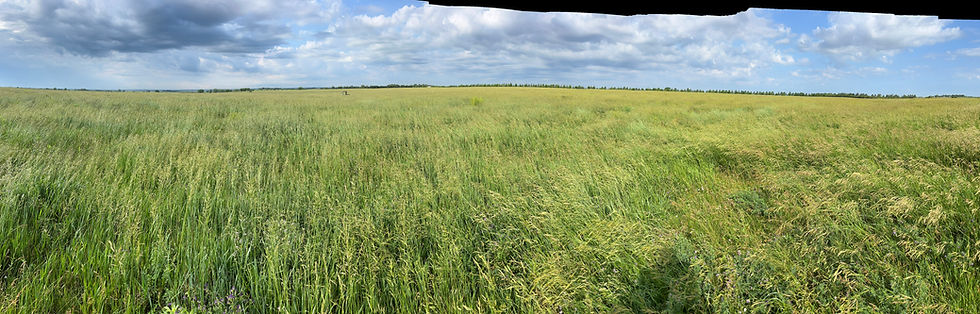
Like many older producers, Holistic Management Certified Educator Ralph Tate recognizes it is time for someone else to take over his 320-acre farm near Fairbury, Nebraska in Jefferson County. Ralph began Holistic Planned Grazing in 2009 and was excited about the opportunity to improve land health and productivity. He applied his engineering background to develop an Excel-based grazing planning application to help others use the
Holistic Grazing Planning process without having to do all the math.

Over the last 15+ years, Ralph has employed a variety of techniques to improve land health and productivity, to include cover crops, high stock density and adequate grazing recovery. During that time, he has increased carrying capacity from 6,750 Animal Days (AD) in 2011 to 12,550 AD in 2019 and now averages around 9,000 AD for each quarter; a 33% increase in carrying capacity. That carrying capacity equates to 60 Standard Animal Units (SAU) for a 150-day growing period or an average production of 60 Animal Days/Acre (ADA), allowing ample residual to improve soil and plant health.
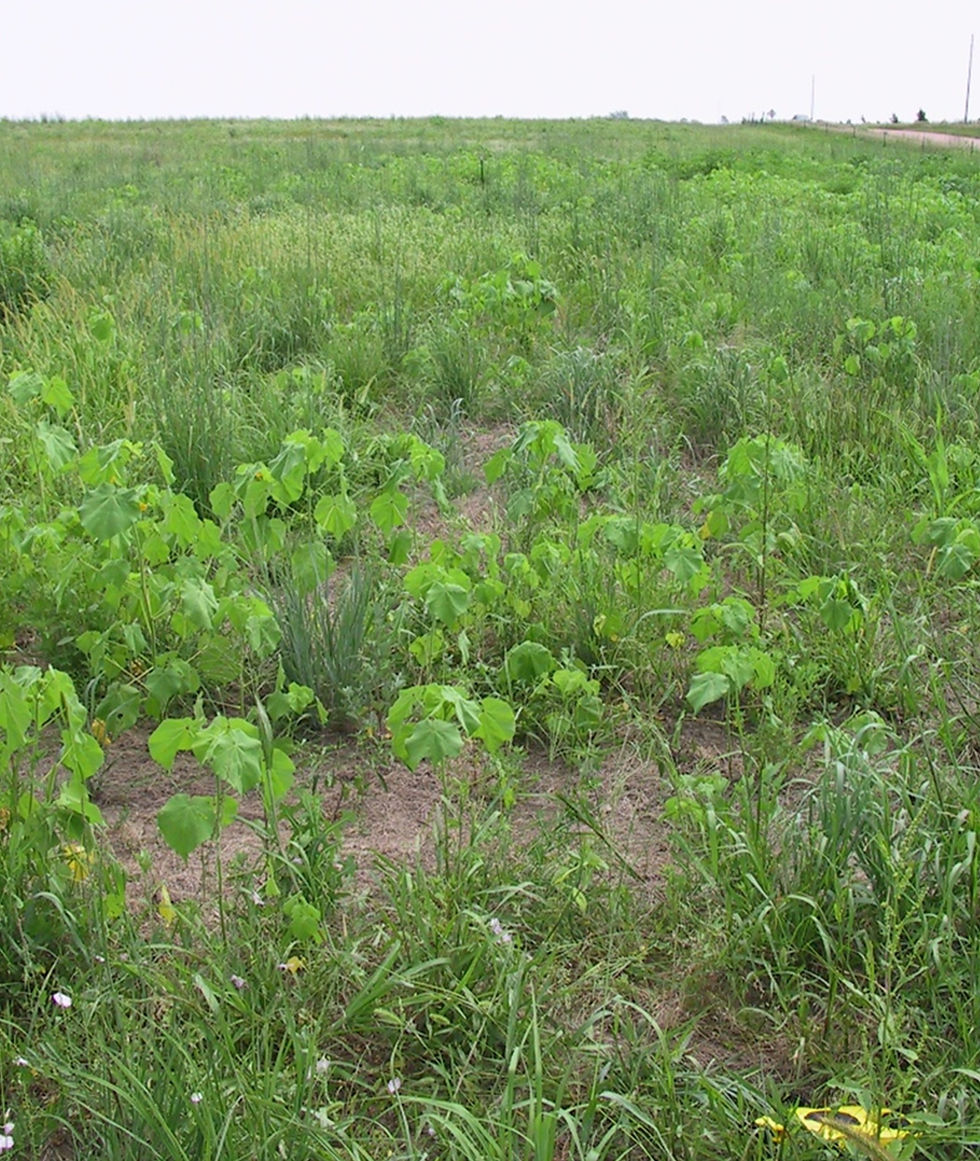
These results are due to employing holistic planned grazing and cover cropping. While Ralph increased stock density to as much as 45,000 lbs/acre with 80-90 SAU on 2 acres, he typically planned for moderate grazing, planning for a 60- to 90-day recovery.

The 320 acres are comprised of two 160-acre pastures located ½ mile from each other along a gravel road. Ralph has subdivided the pastures with electric cross-fencing, using strip grazing and portable water tanks to achieve desired stock density.
On the East Pasture, in the spring and summer of 2016 Ralph planted cover crop mixes of legumes, grasses, brassicas and other broad leafs to improve the forage stand before planting a native prairie mix. While the rainfall averages 33 inches/year, 2017 and 2018 were dry years. With improved rains in 2019 he replanted native grasses and has been able to graze the property twice annually before the growing season ends in early October.
This focus on improved land health has also resulted in improved animal performance. The cattle that graze on Ralph’s land are part of a fall-calving system. This herd consistently achieves a 90-95% calving rate.

With his focus on improving soil health, he has improved soil organic matter over the past 20 years. Likewise, Haney soil health scores have improved from an average of 12 to an average of 24 (on a scale of 0-25).

Future Potential


Because the property is only 6 miles from Fairbury, it is on rural power and water, so water access is from the rural water district. Also, because this grazing project was something Ralph did on top of his full-time day job, he did not pursue owning or direct marketing cattle, although there is a processor about 70 miles away. Likewise with Lincoln only 1 hour away, Omaha 2 hours away, and Grand Island 1.5 hours away there is a market of over 1.5 million people in a two-hour radius.
As Ralph works to transition the farm to another regenerative agriculture producer, he notes that greater gross profit per acre could be achieved by incorporating small stock options like chickens, turkeys, pigs, sheep, or goats.
Ralph is open to creative financing options as he wants this land to go to someone who wants to be a part of the community and continue the regeneration of this land. “I’ve moved the marker for 20 years,” says Ralph. “I am looking for someone committed to building upon my efforts to achieve further progress. I’m also committed to helping the next regen ag owner get up and running with this place through any mentoring they would find helpful.”

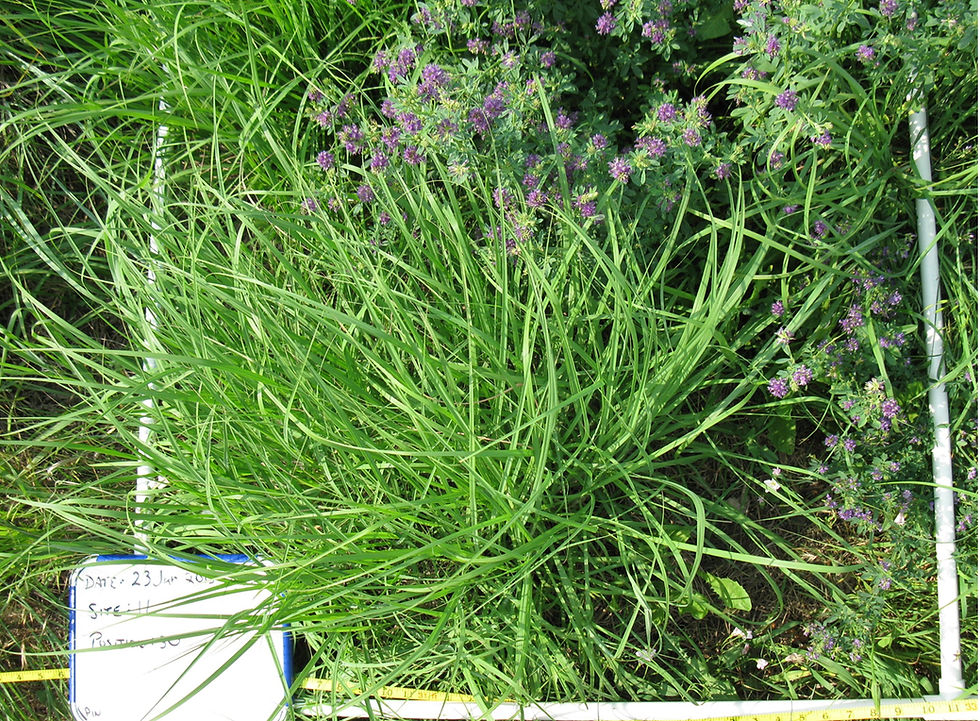
Ralph’s commitment to improving the land is evident in the 1 mile of shelter belts he’s planted on the West Pasture along with the 1 mile of buried 2-inch water line and 11 water hydrants. On the same pasture he has installed 4,000 feet of 2-inch surface water line and 5-wire electric perimeter fence and 2-wire cross fencing for 7 permanent paddocks. In 2012, he built a 30-ft x 30-ft pole barn, wired for 220 v. Soil type on this parcel is 78% Type II (Crete silt loam, 0-3% slope) and 22% Type III (silty clay loam, 3-7% slope) soils.
The East Pasture includes a 55-acre virgin native prairie and 100 acres seeded to a native prairie mix in 2016 with over 150 species of grasses, legumes, sedges, wildflowers & forbs. This parcel has ½ a mile of buried 2-inch water line and 6 water hydrants. It has a 4-wire electric perimeter fence and 2-wire cross fencing for 10 permanent paddocks and a 32-ft x 28-ft storage shed with electricity. This parcel has a mix of 40% Type II (Crete and Muir silt loam, 0-3% slope) and 58% Type III (silty clay loam, 3-7% slope) soils.

If you are interested in pursuing this succession opportunity, contact Ralph at 402-250-8981. For more information about how the landscape has changed over the years, look at the Google Earth images below.


