
Drought Planning + Stockmanship in Action at Mimms Ranch
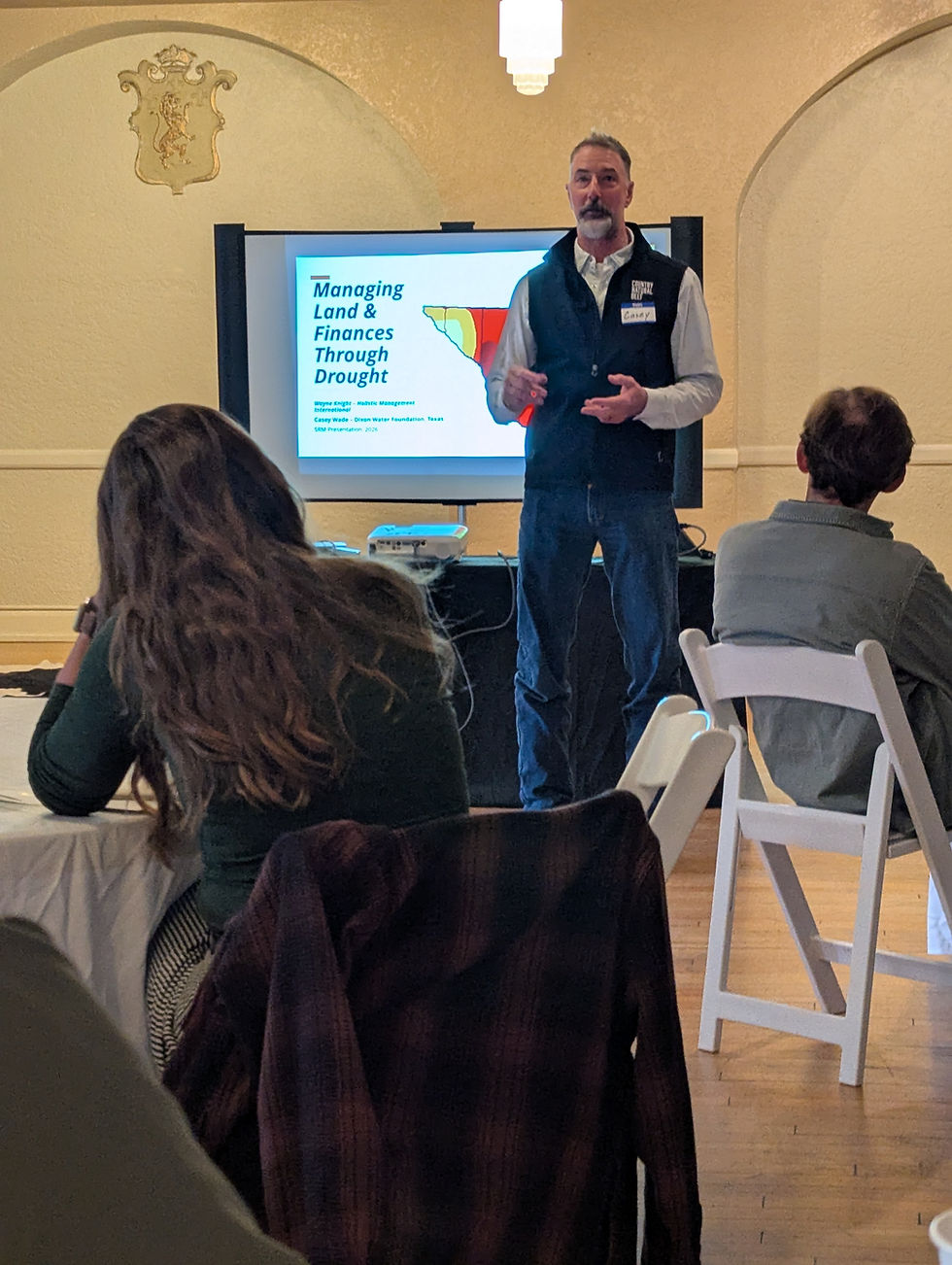
In the wide-open expanse of West Texas, where rainfall is unpredictable and resilience is a daily requirement, a recent 2.5-day workshop at the Mimms Ranch offered something rare: practical hope grounded in experience. Hosted by Holistic Management International in partnership with the Dixon Water Foundation, the “Success Through Drought and Stockmanship” workshop brought ranchers, land managers, and curious learners together to tackle one of the most pressing challenges in agriculture—how to thrive, not just survive, in dry conditions.
Where Land Meets Learning
Set on roughly 16,000 acres of Chihuahuan Desert grassland, the Mimms Unit of the Dixon ranches serves as both a working operation and a living classroom. Participants weren’t confined to classroom lectures—they stepped directly into the landscape, observing firsthand how thoughtful grazing strategies can transform brittle environments into productive ecosystems.
This setting was no accident. The Dixon Water Foundation has long used its ranches to demonstrate how land stewardship, water conservation, and profitable ranching can coexist. Hosting the workshop here grounded every lesson in real-world application.
Two Core Skills, One Mindset
At its heart, the workshop focused on two interconnected disciplines: drought planning and stockmanship.

Drought, as emphasized throughout the sessions by Holistic Management Professional Certified Educator, Linda Pechin-Long, isn’t just a weather event—it’s a management challenge. Participants explored how proactive decision-making such as setting trigger dates, planning alternative forage, and managing stocking rates, can prevent both ecological and financial loss.
Equally important is stockmanship: the art and science of working with livestock in a calm, intentional way. Under the expert guidance of Dawn Hnatow of Cattle Up Stockmanship, attendees learned how cattle respond to pressure, movement, and positioning. These weren’t abstract ideas; they were practiced on foot, in the field, where subtle shifts in handler behavior translated into immediate changes in herd movement.
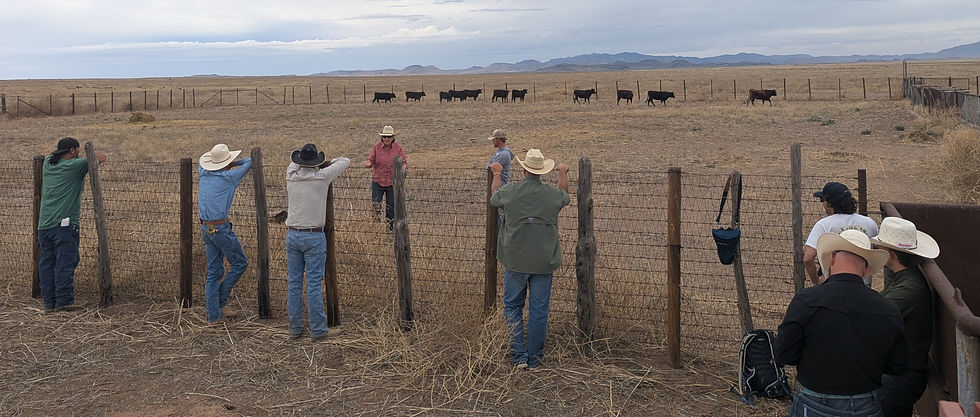
The takeaway was clear: better stockmanship isn’t just about handling animals—it’s about improving land health, reducing stress, and increasing operational efficiency.

An additional key presentation was hosted by Bain Wilson and Tim Lockhart of Ranchbot, who are providing technological advances in water monitoring for ranchers and land stewards and generously sponsored the event. Some attendees already had Ranchbot deployed on their operations and others got the opportunity to engage with the experts for the first time. What was clear from the entire group is that creativity in monitoring techniques is crucial to being successful in extreme, brittle conditions.
Learning from Experience
The workshop featured seasoned practitioners who brought both theory and lived experience to the table. Leaders like Casey Wade and Zach Vaughn of the Dixon Water Foundation shared how proactive grazing strategies help maintain rangeland health even during water scarcity, while Professional Certified Educator Linda Pechin-Long from Holistic Management International guided participants through the topics of structured grazing plans, forage assessments, carrying capacity, and recovery periods designed to build resilience over time.
What made these sessions especially valuable was their transparency. Attendees weren’t just shown successes, they were walked through decision-making processes, trade-offs, and adaptive strategies that evolve with changing conditions.

Seeing Regeneration in Action
One of the most powerful aspects of the workshop was the visual contrast on the land itself. At Mimms Ranch, different grazing approaches—such as continuous grazing versus holistic planned grazing—have been studied side by side.
The results are striking: improved soil cover, greater plant diversity, and increased wildlife presence under planned grazing systems. These aren’t theoretical outcomes—they’re visible on the ground, offering participants a tangible sense of what’s possible.

An added bonus to the workshop was the inclusion of applied research of scientists studying strategies that support working lands of the Chihuahuan Desert. As Dr. Carlos Gonzalez of Borderlands Research Institute at Sul Ross University noted in his presentation out on the range, monitoring not only your grazing systems, but also your soils, precipitation, livestock health, and vegetation (amount and diversity) are important factors in decision-making in your specific operation. Through testing restoration techniques that enhance the diversity of vegetation, improve soil moisture retention while reducing erosion, and monitoring and adapting to the interactions between livestock grazing systems and desert ecosystems landowners can affect real change.
A Community Built Around Stewardship
Beyond the technical knowledge, the workshop fostered something equally important: community. Ranchers and land stewards from across the region gathered to share challenges, compare strategies, and build relationships rooted in a shared commitment to land stewardship. In an industry often shaped by isolation and uncertainty, that sense of connection can be just as valuable as any drought plan.

Course evaluations show that 94% of attendees would recommend this workshop to others and 88% reported knowledge change on how to improve their enterprise through stockmanship practices and drought preparedness.

Why It Matters
Workshops like this come at a critical time. Across the American West and beyond, producers are facing increasing pressure from drought, market volatility, and environmental change. The need for adaptive, regenerative approaches has never been greater.
What the “Success Through Drought and Stockmanship” workshop demonstrated is that solutions already exist—but they require a shift in mindset. By combining careful observation, proactive planning, and respectful animal handling, land managers can build systems that are both resilient and profitable.
The lessons from Mimms Ranch extend far beyond West Texas. Whether managing a large ranch or a small parcel of land, the principles remain the same: pay attention early, plan ahead, and work with nature rather than against it.
In a landscape defined by scarcity, this workshop showed that abundance—of grass, water retention, biodiversity, and knowledge—is still within reach for those willing to learn, adapt, and lead.


