Weaving Holistic Land Management and Whole Animal Butchery
Guest blog by Heather Smith Thomas
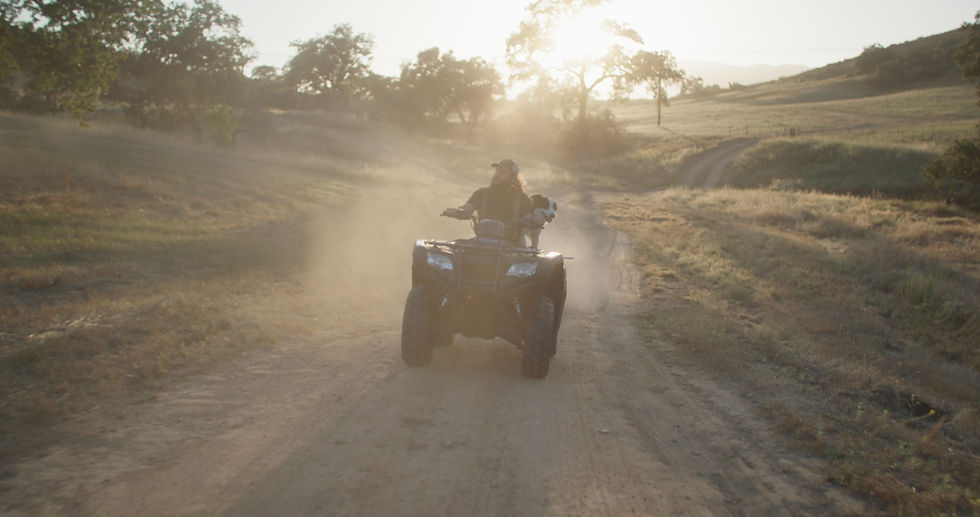
Dylan Boeken is a first-generation shepherd in Ojai, California and dedicated to restoring a lost food culture through regenerative land management through his business called Boek House Hearth and Husbandry in which he primarily raises lambs and, more recently, goats and pigs.
Dylan grew up in southern California and is now a shepherd, butcher, and advocate for regenerative agriculture. “At first, I wanted to do landscape restoration and in college I studied natural resource management and biology,” says Dylan. “Leaving college, I knew I wanted to either work in conservation biology or sustainable agriculture as I was calling it then. My last year of college I worked on a small farm. But when I left college, I first went into conservation biology, wanting to do sustainable agriculture. My final year in college I worked on a small farm doing orchard and greenhouse management. My first job in conservation biology was working on someone else’s PhD doing primate research in Peru. I enjoyed that a lot, but it didn’t seem to have the right focus for me. It was like missing the forest for the trees, putting so much effort and focus on this one species.
“When I came back, I wanted to study more and learn how to use broad acre solutions and focus on whole-system restoration. I didn’t really know what that would entail so I ended up taking a permaculture design course. Despite having just been in college for five years with two majors, this showed me many different types of work and solutions that I had not previously been aware of or exposed to.”
Dylan did a lot of personal study following that course and came across the Savory Institute. “This seemed to check all the boxes for me, primarily because it was a broad acre, whole-system restoration approach,” says Dylan. “It was also something that could ground my ecological ideals. Holistic Management International and the Savory Institute explained how to not only manage animals in a way that can restore land but also produce healthy animals, healthy meat and showed me that you can also make a living doing this.”
This is how Dylan got Boek House Health and Husbandry up and going—after being inspired by holistic land management, apprenticing under Larry Santoyo, receiving his accreditation from the Savory Institute, and honing his livestock skills at Five Bar Beef and Shepherdess Land and Livestock. He feels his mission is to restore the connection between the land, the animals, and the food people eat.
Learning Holistic Grazing Planning
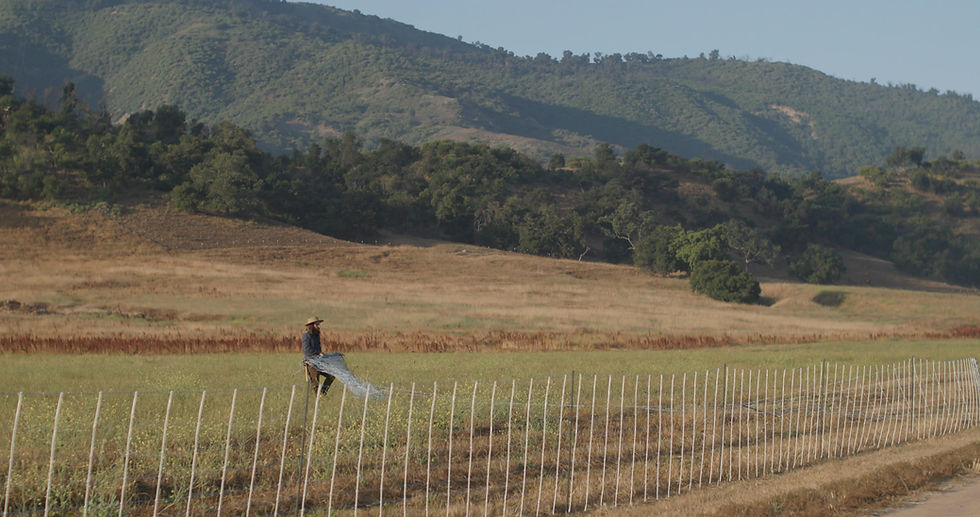
Dylan then took a Holistic Management course at White Buffalo Land Trust in Lompoc, California with Spencer Smith and Jesse Smith and started reaching out to people who were doing this kind of work nearby. “In Southern California there were not very many Holistic Management practitioners, but there were a few,” says Dylan. “I went to work for an older rancher, Frank Fitzpatrick, who had been doing these things for about 40 years and raising Barzona cattle. I got some training from him. His outfit is called Five Bar Beef.” Frank Fitzpatrick did planned intensive rotational grazing for many years to improve the soil and pastures on his ranch, and later had people paying him to graze his Barzona cattle in certain areas that needed to regenerate the soil, get rid of invasive plants, reduce fire risk and restore native plant populations.
“I worked with him for a while and then COVID derailed some of that, while I was working on some other projects,” says Dylan. “I didn’t really know how to get into ranching even though I knew I wanted to do it. I figured I could get into it by gaining access to land, so I started reaching out to conservation organizations and land trusts to see if they would consider letting me put livestock on land they owned and managing them holistically. I really didn’t have experience so there wasn’t much I could say in my proposal and it was a huge risk.
“I knew I needed more experience. Through those efforts to find land I was introduced to Connor Jones, a well-known land restoration practitioner in our area, who introduced me to Cole Bush when she was in the beginning stages of forming her contract grazing business. By the time she launched her business I was ready to go and came on as a shepherd in that business. I worked under one of her trained shepherds for about six months and then he left the business, so very quickly there was a lot of responsibility in my hands.”
This is how Dylan became a lead shepherd in a fledging contract grazing business called Shepherdess Land and Livestock, to provide fire prevention and ecological enhancement services, managing vegetation using holistic prescribed grazing methods with goats and sheep.
“I built a lot of skills through the training Cole gave me and other mentors I was meeting along the way,” says Dylan. “It was sort of a trial by fire to start understanding the business of sheep. One of the main reasons I had gone into grazing was to produce meat, so Cole was very helpful from the beginning in helping me start my own meat business. I often got paid in sheep so I could set up some meat sales and do custom slaughter for community members.
“Initially I was still landless in terms of grazing ground but I kept buying more sheep and putting them into Cole’s contract grazing business. I got more clients and more meat customers. From the beginning I tried to focus on the sale of whole animals, through the custom exempt route (selling the animal to a customer who can then have it butchered) and selling whole animals to restaurants. There are not many chefs who can break down animals or want to, in their kitchens, but I was fortunate to meet a handful and they have remained very loyal clients,” Dylan says.
“Through one of my restaurant clients who owns a restaurant called The Dutchess, I was introduced to a friend who had purchased a large acreage here in Ojai where we have a dry climate in a coastal sort of Mediterranean hilly area. This man owned substantial acreage and was willing to do a free lease; he just wanted animals raised there to manage the soils and biofuels, so we formed a good relationship and I’ve been grazing my animals on his land, as my primary land base for the past four years.”
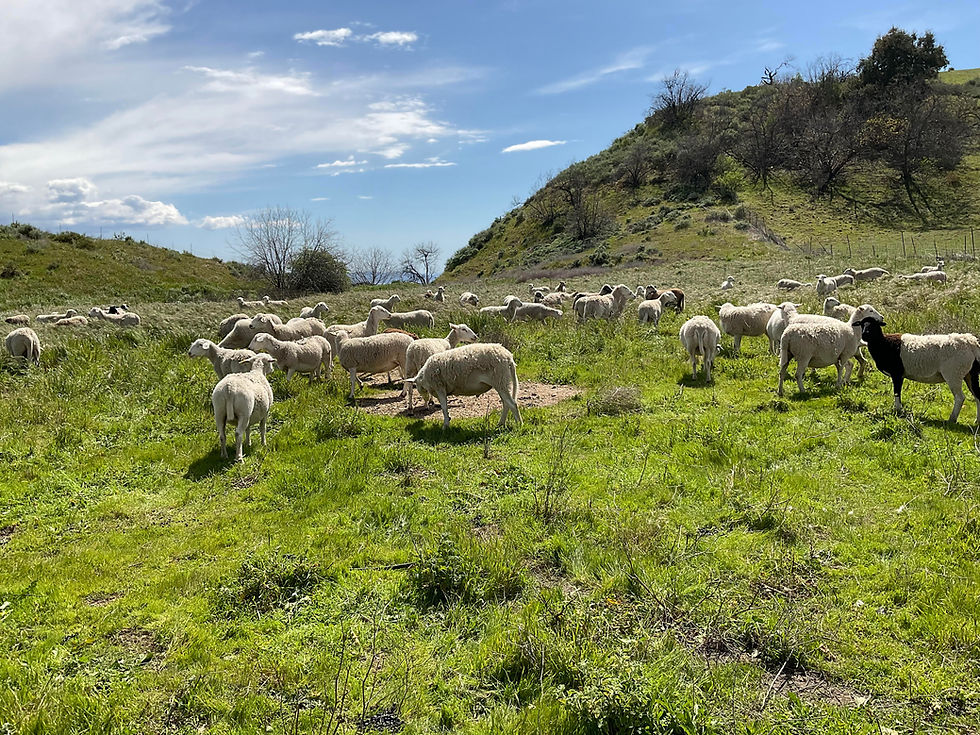
Dylan also still puts some of his animals into Cole’s business. “As she needs more numbers throughout the year, I move more of my sheep in there to help manage my stocking rate on the leased ranch that I graze, called the RMR ranch,” says Dylan. “I have on average about 100 to 200 sheep on that ranch throughout the year. That ranch is 1,000 acres and I graze on about 350 acres of it. Depending on the year, that portion can sustain 200 sheep throughout the whole year. This year was dry; the rain was a little less, and late, so my sheep numbers are a little lower this year. Fortunately, I can juggle those numbers by putting some animals in Cole’s business.
“I also have a home ranch now, about 30 minutes away in upper Ojai on top of Sulfur Mountain. It’s just a 20-acre ranch but part of the reason we are there is because there’s about 300 acres around it of unused, ungrazed land. I can move animals off the RMR Ranch to graze there throughout the year, as well.”
Creating Healthy Meat
From the beginning, a huge focus for Dylan has been on whole animal utilization. “Part of my desire to get into ranching wasn’t just the land management and restoration aspect, but also a healthy food and high-nutrient density diet interest. As a young person I had some minor but chronic and debilitating health issues that started when I was about 18 years old. I tried a lot of physical approaches to remedy these, but almost 10 years later after none of those efforts had changed the problem, I learned about some dietary things that people were having some success with,” Dylan says.
“Initially I tried an elimination diet and started to eat healthy meat with a high-nutrient density diet, and then was able to remedy those ailments surprisingly quickly. That opened a deeper passion for high-quality food. Through all this, I also discovered the rich and deep culinary cultures that each of us has in our ancestral heritages that are rapidly being forgotten in today’s world and are rarely utilized. By rediscovering some of these practices and looking at parts of the animals that we are now less familiar with we can find healthier, cheaper ways to eat high-quality food. We can also have a very colorful and vibrant culinary kitchen economy in our own homes.
“This is what fueled my desire to try to do as close to whole-animal sales as possible. I do work with people who just want quarters—like hindquarters or forequarters, but I try to get people to also use the forgotten parts like tripe, tongue, heads, etc.”
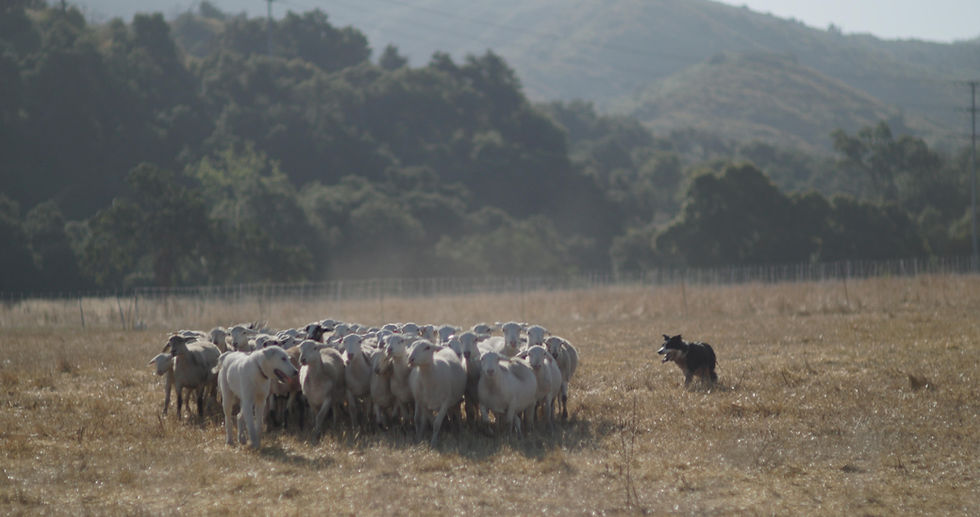
Dylan’s livestock grazing beyond traditional grass-fed standards and benefit from a diverse diet that enhances both the meat’s quality and the landscape’s vitality. These animals graze on more than 100 different species of grasses, shrubs, and trees across Southern California’s Mediterranean pastures, sage-covered hills, and oak woodlands, grazing on everything from oats and thistles to elderberry and coast live oak. The result is meat that is rich in flavor, nutrients, and a reflection of the land being grazed.
Another part of the business is the butchering. “I am the butcher and was trained by Brandon Sheard (Farmstead Meatsmith) and he taught me an incredible amount about not only butchering and slaughter but also husbandry as well. This is something I am trying to incorporate more and more into my business, to supplement the whole animal-culinary aspect that we try to focus on,” Dylan says.
“We are starting to put recipes together (and videos) for cooking the lesser-used parts of the animal—not only for things like tripe, liver and kidneys but also for some of the things a lot of people have reservations about. We also want to get people more familiar with different ways of cooking, like braising certain cuts. Most of our culinary culture in the U.S. is focused on hot and fast, like searing steaks. We want to make people more comfortable with cooking legs, shoulders and braising shanks and other cuts. Not only are these easy to cook but they are also absolutely delicious. So, we want to put some educational materials together that can help support people in this area as well.”
One of the biggest challenges and costs of the carcass meat business is freezer space and storage for the meat. “I have invested a great deal in freezer storage and I also have good relationships with a large freezer facility I ship my meat to, before I receive it. It costs money just to keep freezers running and you have to keep things coming in and going out. It takes time to try to iron out any problems and make things as efficient as they should be.”

Adaptive Grazing & Business Planning
The Holistic Management course Dylan took was beneficial and he has also been able to teach portions of Holistic Management courses to ranchers who have been on the land for several generations. “I came into this with a holistic land management view and have been trying to use this from the inception of my business. I have found that despite having a decent understanding of the principles, there is also a lot more skill-based foundation required,” Dylan says.
“You can’t just have an understanding; you also need the skill to read the landscape, understand your animals and the different forages available, the palatability of different forages at different times of year, etc. It’s not as easy as I initially thought it would be. I’ve run into a lot of difficulties and challenges when trying to make the best management decisions in terms of how long I keep the animals somewhere.
“Last year was a big turning point for me because I’d started grazing the land around me long enough to pick up on kind of pattern—seeing where I had set things back and where I was able to make the right call on when to move. There’s also the challenge of keeping up with the management itself and a grazing plan. I am still far from doing the best practice in terms of making initial plans for a dry season and wet season grazing. Things change and then you have to adapt. I am not always updating the numbers as quickly as I could be.
“We are not always building paddocks the same size or in the same area or have the same amount of animals. I am still learning, and growing in my holistic practices in terms of the ease of adjusting my plans and what level of minuteness I make the plan. I used to try to make a plan for each of my set paddocks which isn’t reasonable with the amount of time I have for that sort of thing, so I’ve backed up a bit and just look at the major paddocks and try to plan for those. I try to make sure I am stocking everything in such a way that I’ll have some reserves that will last until the beginning of April or even mid-April. I’d like to have all my stockpiled feed—left over from the previous rain year—last until then,” Dylan says.
“We have a very short window of time to graze green grass. I’ve always tried to carry about 200 sheep throughout the year, but this next year I want to try something different. We are actually going to cut down the lambing program so that we don’t have to carry that many ewes year-round. We’ll hold onto a handful of the ones that have been doing the best job, and maybe work more on genetic improvements over the next couple years, but for now I want to sideline the breeding program a bit and focus more on getting feeder sheep in, so I can finish them faster and stock them heavier during the short, best part of the grazing season with green grass.”

Dylan raises Katahdin-Dorper cross sheep. “I know a handful of people in California who are raising similar genetics and the same cross, but we grow them very slowly, where we are. I don’t sell anything under a year old. I prefer to grow them to about 18 to 20 months old; almost everything I sell is a yearling lamb. This is partly for economic reasons because of the fixed cost on purchasing the sheep and slaughtering the sheep. For every additional 5 pounds I can get on the carcass is what allows the numbers to work, but also, it’s because of the feedback I’ve gotten from clients. About 55 to 60 pounds on the rib rack is what most Americans are expecting and want, so we try to get them to that size, though I do have a few customers who want young, small lambs. Sometimes I can provide those, but primarily I am trying to hit that 55- to 60-pound carcass so that’s why I hold onto them for 18 to 20 months.”
Dylan uses the Katahdin-Dorper cross because they are well suited to this particular California environment. “They can survive here and don’t get sick, and I don’t have to dock tails. We don’t get any fly strike or hoof problems. Even if they are healthy and growing, however, they still grow very slowly once the forage dries out. This is the side of the business that I will be working on quite a bit, regarding timing. I have some friends about 5 hours north of here who are getting some of their lambs to that same weight in just 6 to 8 months, but they have a lot more rainfall and some irrigated pasture and some interesting nutrient programs, so this is something that I am definitely interested in,” Dylan says.
“One of the things I really like about the way we are doing sheep is that they are just eating what’s available here on our landscape. We don’t have a supplementation program. If I could find a good high-quality supplementation program I might be interested in trying it, but for now the sheep are eating just what’s available and it is a very diverse diet—everything that the southern California landscape has to offer. This includes the annual plants like wild oats, soft chess (annual grass) and Italian rye, but also lots of shrubs, including poison oak, elderberry, chaparral and other shrub species.”
Future Plans
Regarding plans for the future, on the grazing side Dylans wants to increase the number of goats. Not only are goats very useful on the landscape in terms of desirable impact under proper management, but are also interesting in the fact their meat is excellent even as older animals. “With sheep you have to carefully manage them so they don’t become mutton, but there’s not that same stigma with goats. People are less hesitant to purchase an older goat. Some people prefer a younger, smaller goat to butcher, but many don’t mind the older animals,” Dylan says.
Even though many people have a few goats and goats have become popular in the back yard as pets, goat meat is still not readily available to butcher shops. “Most of the butcher shops I sell to say that goats are in high demand but hard to come by. So, I am excited about increasing the number of goats I’m raising,” Dylan says.
“We also have a pig program. I enjoy curing meat and smoking it, so I like having some pigs. I was a little nervous at first about raising pigs in terms of their impact on the land; I’d seen a lot of pig projects go sideways in terms of soil quality. This year, however, I had the benefit of visiting a handful of well organized, well managed operations with pastured pigs and forest pig programs that seem to be moving the ecology in the right direction. So, I am looking forward to raising more pigs. We are still figuring out exactly what piece of land we’ll be doing this on. We have a group of pigs on my leased ranch right now but I’m not sure if they will be staying there or moving to someplace closer to my home ranch.
“I am excited to see what some of those impacts look like, and to ultimately put more time into cooking more of the less common cuts and getting people interested in that sort of culinary experience in their own kitchen. I’ve taught a handful of animal slaughter and butchery classes over the past 5 years and I want to get those a little more formalized and have classes on a regular basis.
“Contract grazing is definitely not easy, but the profit margins are certainly better. Another interest of mine is just trying to prove to others and myself that this can be done profitably at the scale and area where I live. There are some challenges, especially with feed quality in terms of the land these animals are on for the majority of the year. And there are always animals to be moved around, and many decisions to be made in terms of management.”
To graze different areas, the animals have to be transported and that takes lot of time and labor itself, to set up corrals and get everything moved to the new location. “I am the one who transports the animals,” says Dylan. “But as we grow our business, I do have my prices set to where we could possibly hire a professional hauler with a big truck—and be able to haul more at a time. For now, however, I do all the hauling. Depending on where we are going, how rough the roads are, and how many animals we need to get there, I use either a 16-foot horse trailer or a 26-foot double deck trailer.
“Timing is crucial in terms of the demand from butcher shops and restaurants, to coordinate with your grazing plan and the contract grazing season—and fire season, etc. Getting everything lined up can be a challenge, so that you can have sheep where you need them, and at the weight you need on them, and have enough feed. It’s like a big dance, with everything in motion.
“There is potentially some new pasture that that I will be grazing, maybe as soon as next year, but that is still to be determined later. I am really enjoying the grazing and I love Holistic Management. I am excited to see what kind of impact I can get with the pigs and how I can figure things out. It’s always valuable to go to other outfits and meet other shepherds. In spite of having things like the regenerative conference and all sorts of other gatherings, this business has so many variables. Different people have wonderful solutions to issues that every outfit faces.”
With that curiosity and interest in learning more about grazing, animal husbandry, and butchery, Dylan will continue to develop the business model for Boek House Hearth and Husbandry so that it can fulfill its mission of regenerating land and utilizing the whole animal through the deeply cultural experience of food. In this way, he will help his many different customers see the connection between the land, animals, food, people, communities, and cultures.